This is the question that separates informed cordyceps buyers from everyone else. Fruiting body and mycelium are both real parts of the mushroom. But they are not interchangeable, and the commercial production method for mycelium creates a quality problem that most labels do not disclose.
What is the fruiting body?
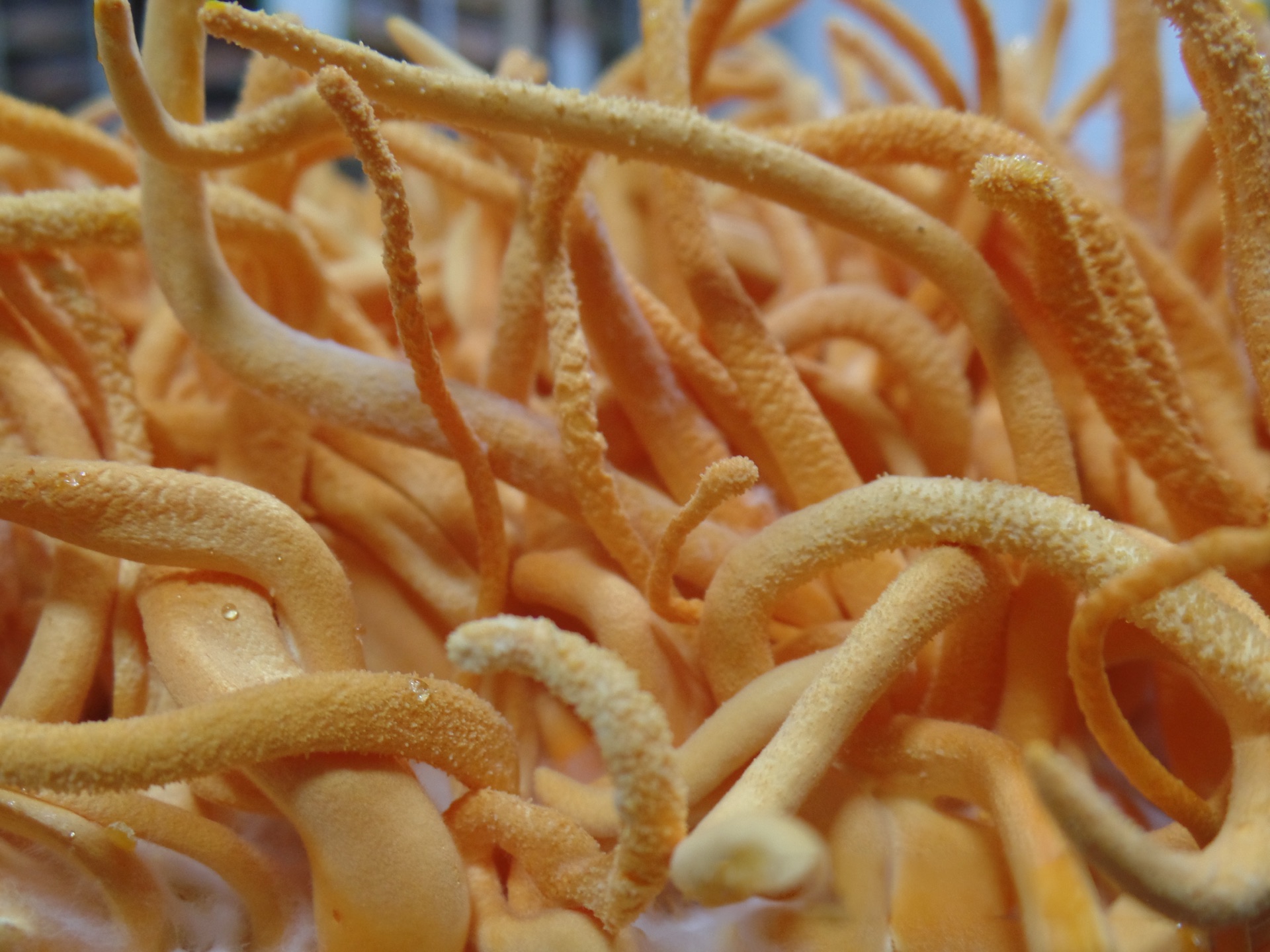
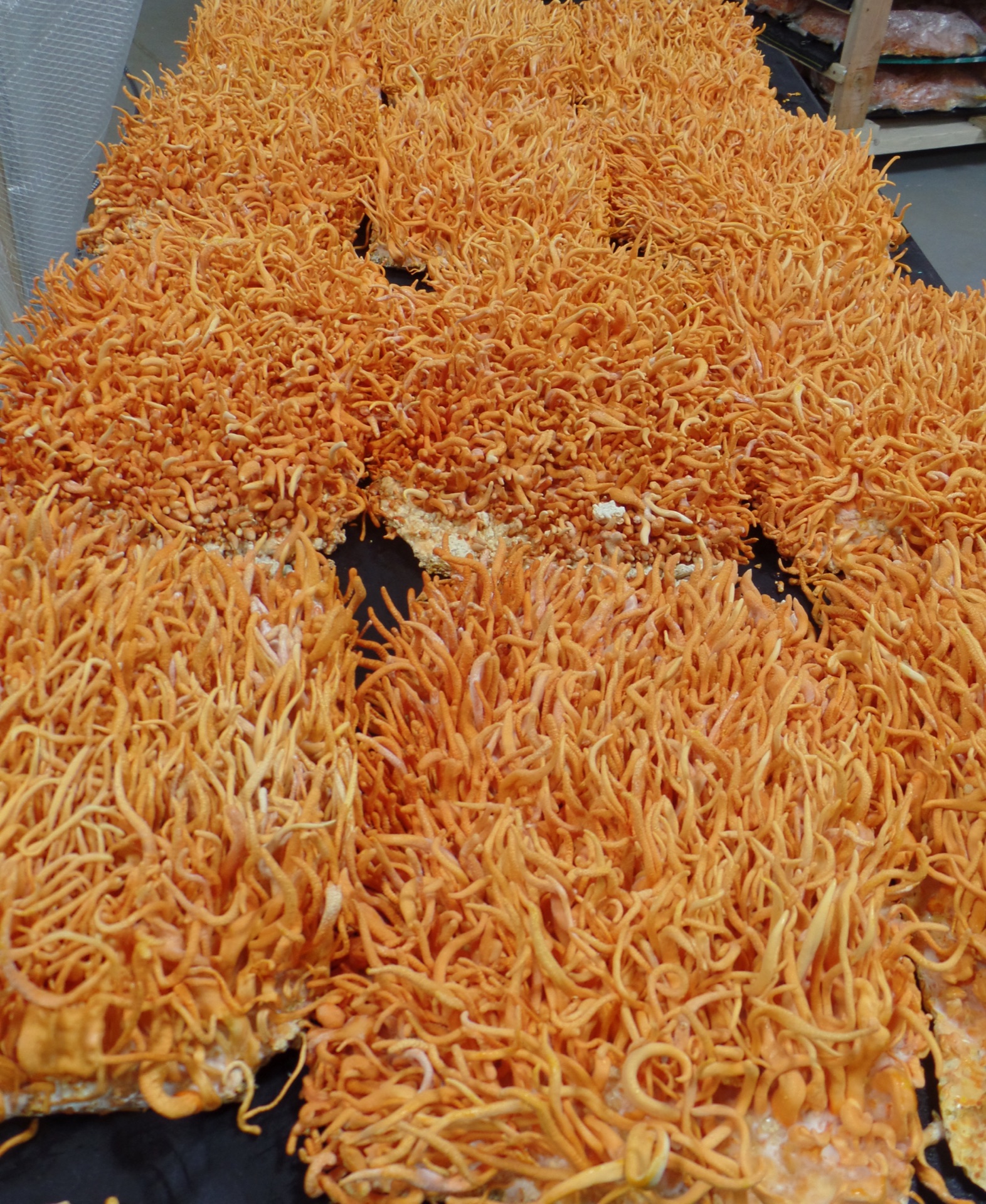
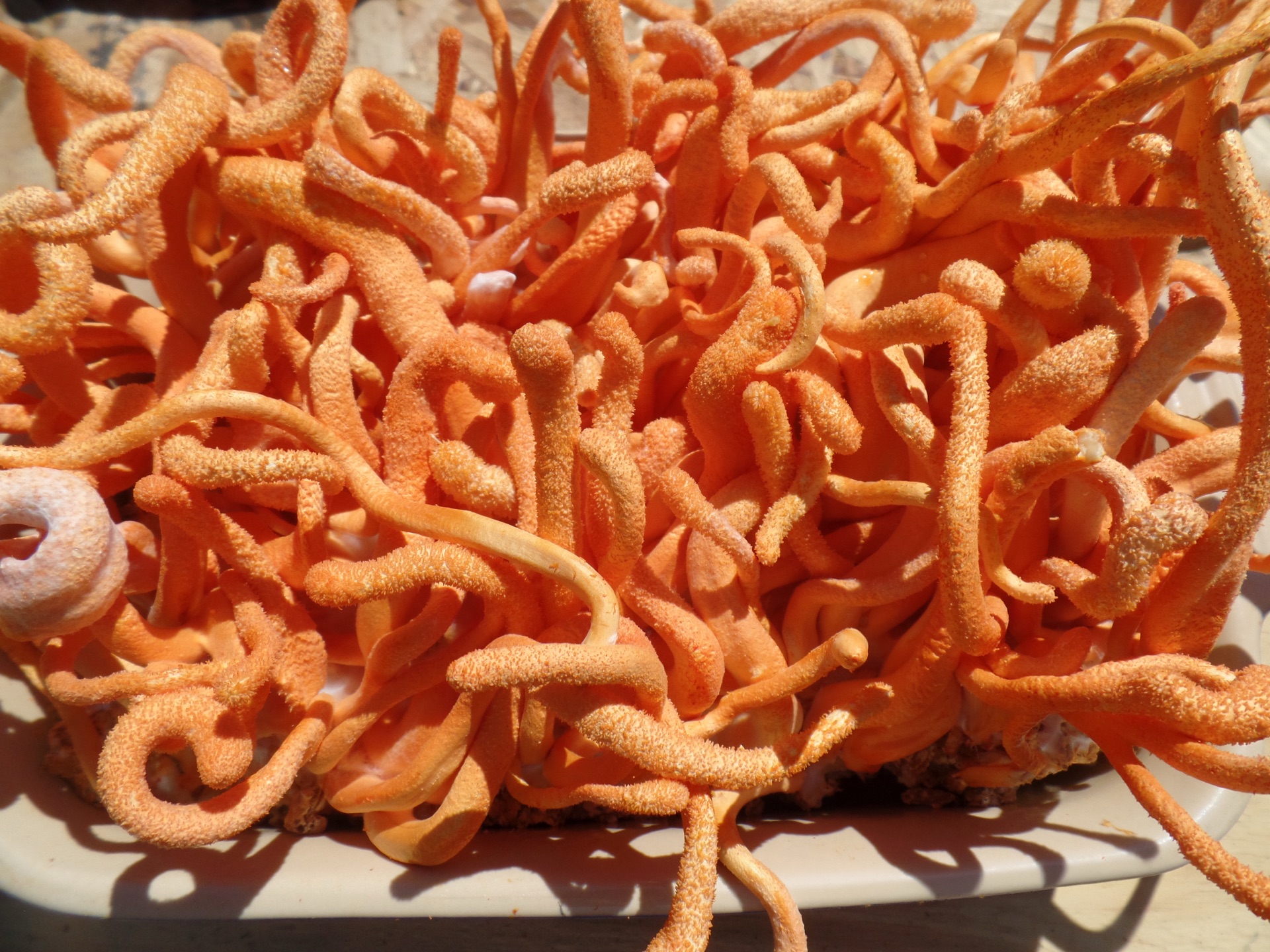
The fruiting body is the mushroom. For Cordyceps militaris, it is the distinctive orange finger-like structure that grows upward from the substrate. This is what the research on cordyceps compounds primarily focuses on. The fruiting body contains cordycepin, beta-glucans, adenosine, polysaccharides, and the other compounds that make cordyceps worth buying in the first place.
Growing the fruiting body requires more time and more controlled conditions than growing mycelium. It is slower and more technically demanding. That is why many commercial operations take a shortcut.
What is mycelium on grain?
Mycelium is the root-like thread structure of the fungus. It can be grown on grain substrate — rice, oats, barley — in a fraction of the time it takes to produce fruiting bodies. The problem is the grain. When the mycelium finishes growing, the grain does not get removed. It gets dried and ground up together with the mycelium and sold as the finished product.
Studies have documented starch content of up to 65% in commercial mycelium on grain cordyceps products. Most of what you are buying is grain. The label may call it cordyceps. Technically it contains cordyceps mycelium. But the majority of what is in the bag came from the substrate, not the mushroom.
Up to 65% starch.
That is what independent studies have found in commercial mycelium on grain cordyceps products. The rest is mycelium. None of it is fruiting body.
Why it matters for your formulation
For brands building supplements, tinctures, or functional food products around cordyceps, the difference between fruiting body and mycelium on grain affects three things directly:
Compound concentration
Whole fruiting body delivers a higher concentration of cordycepin, beta-glucans, and adenosine per gram than mycelium on grain, which is diluted by starch. If your formulation specifies a compound target, your starting ingredient matters.
Label accuracy
If your product label says "cordyceps fruiting body" and your ingredient is mycelium on grain, that is a labeling problem. Regulators and informed consumers are increasingly aware of this distinction. Sourcing the correct ingredient protects your brand.
Story and traceability
Brands built around ingredient transparency cannot tell a clean story with a supply chain that includes undisclosed grain filler. Fruiting body from a single traceable farm gives you something real to put on your label and talk about with your customers.
How to verify what you are sourcing
Ask your supplier three direct questions. The answers clarify everything:
Is this whole fruiting body or mycelium on grain? If the answer is anything other than a clear "whole fruiting body," dig further.
Are there any grain ingredients in the finished product? If the answer is yes or unclear, the starch problem applies.
Can you provide a COA showing cordycepin and beta-glucan content? Third-party lab results on the actual batch tell you what the compound concentration actually is, not what the marketing says it should be.
Whole fruiting body only. No grain. One ingredient.
USDA Certified Organic. Grown on a family farm in western North Carolina. COA available every batch.