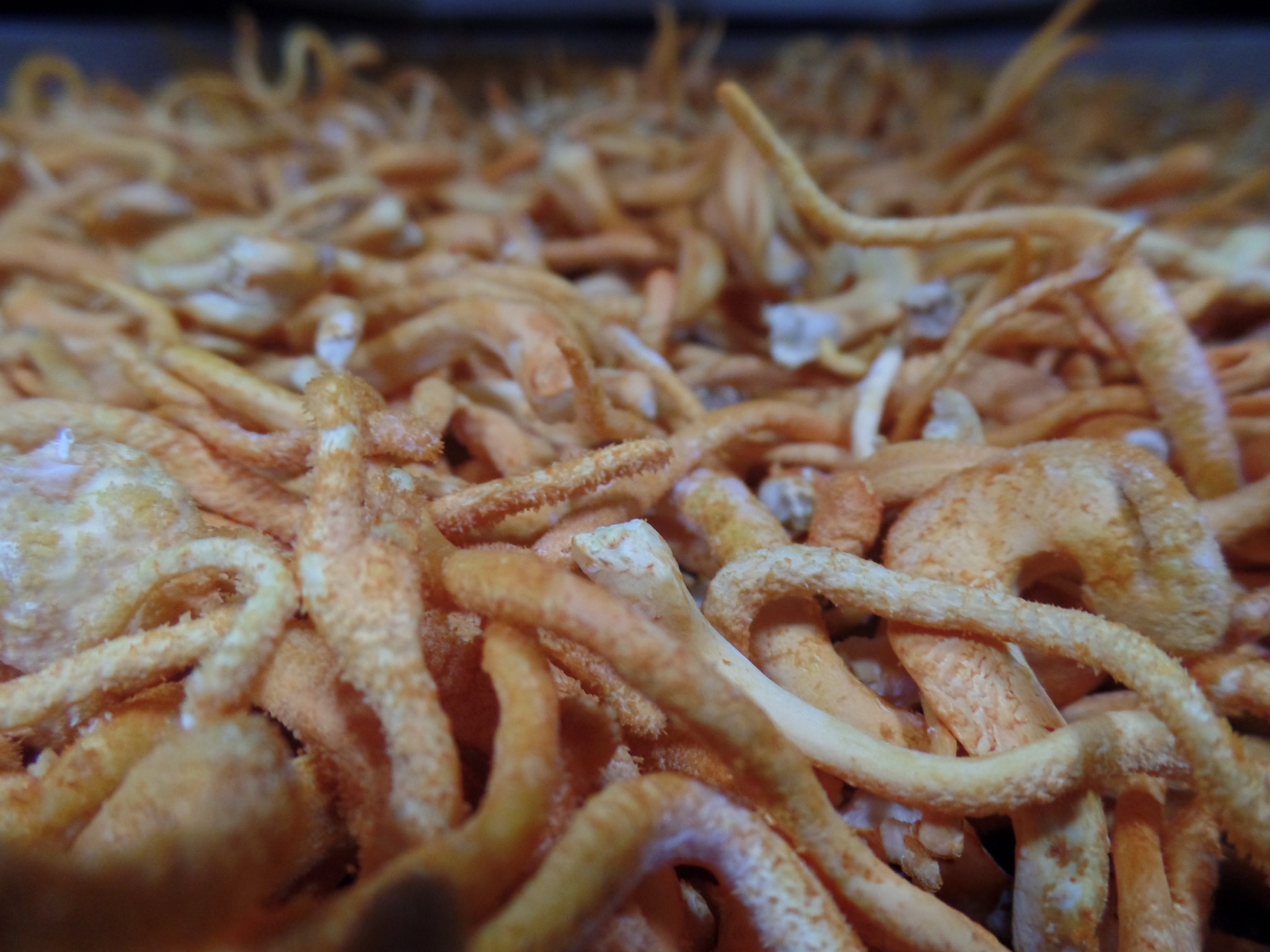
Most cordyceps labels are incomplete. Some are misleading. A few are outright wrong. The market moved faster than consumer awareness, and a lot of product got into a lot of hands without the people buying it knowing what they were actually getting. Here is how to read a label and what to do when the label does not tell you enough.
What a cordyceps label should tell you
Four things should be clear on any cordyceps product before you hand over money:
The species
Cordyceps militaris and Cordyceps sinensis are different species with different compound profiles. Militaris is the commercially cultivated species. Sinensis is the rare wild-harvested one — and heavily adulterated in the market. If the label just says "cordyceps" without the species name, that is not enough information.
The part used
The label should say "fruiting body" explicitly. Mycelium products may say "mycelium," "mycelium biomass," or list a grain in the ingredients. If the label is silent on this, the supplier should answer the question directly. If they won't, that is your answer.
The certification
The USDA Organic seal means an independent certifier audited the growing process. The word "organic" without the seal means the seller decided to call it that. These are not the same thing. Ask for the certification number and the name of the certifying agent if you need to verify.
The origin
Where it was grown, not where it was packaged or distributed. A product can be imported, packaged in a domestic facility, and carry a US mailing address. Country of origin should tell you where the mushroom was actually cultivated.
The mycelium on grain problem
Mycelium on grain is the most common quality issue in the cordyceps market and the least talked about on labels. Mycelium grows slowly on a grain substrate — rice, oats, barley. When the product is processed, the grain gets ground up along with the mycelium. What gets sold is a mixture of the two.
Studies have found that mycelium on grain products can contain upward of 65% starch from the substrate. If you are buying cordyceps for its compound profile, most of what you are getting is grain. The label may not say this directly. Look for grain in the ingredient list. If it is there, that is what you are buying alongside the mycelium.
If grain is in the ingredient list, grain is in the bag.
Whole fruiting body cordyceps has one ingredient. The mushroom.
The organic claim problem
The word "organic" on a cordyceps label is only meaningful if it is backed by USDA Organic certification. Without that certification, no independent auditor verified what substrate was used, what was applied during cultivation, or how it was handled after harvest. The seller is the only one who checked.
USDA Organic certification requires an annual on-site audit by a third-party certifying agent accredited by the USDA. The certifier reviews every input, every stage of production, and issues a certificate. That certificate has a number. You can ask for it. If a supplier cannot produce it, the organic claim is self-reported.
What to ask before you buy
If the label does not answer these questions, ask the supplier directly. The answers tell you everything:
Is this fruiting body or mycelium on grain?
A direct question deserves a direct answer. If the response is vague or redirects to marketing language, that is a red flag.
Can you provide your USDA Organic certificate?
Not a screenshot of a seal. The actual certificate, with the certifying agency name and certificate number. If it exists, it takes 30 seconds to send.
Where was this grown?
The farm or growing facility, not the distribution address. If they cannot tell you where the mushroom was actually cultivated, traceability ends there.
Do you have a COA for this batch?
A Certificate of Analysis from a third-party lab confirms what is actually in the product. It should show cordycepin content, beta-glucan levels, and contaminant screening. Batch-specific, not a generic reference document.
Carolina Cordys answers all four.
Whole fruiting body. USDA Certified Organic. Grown in western North Carolina. COA available on request.