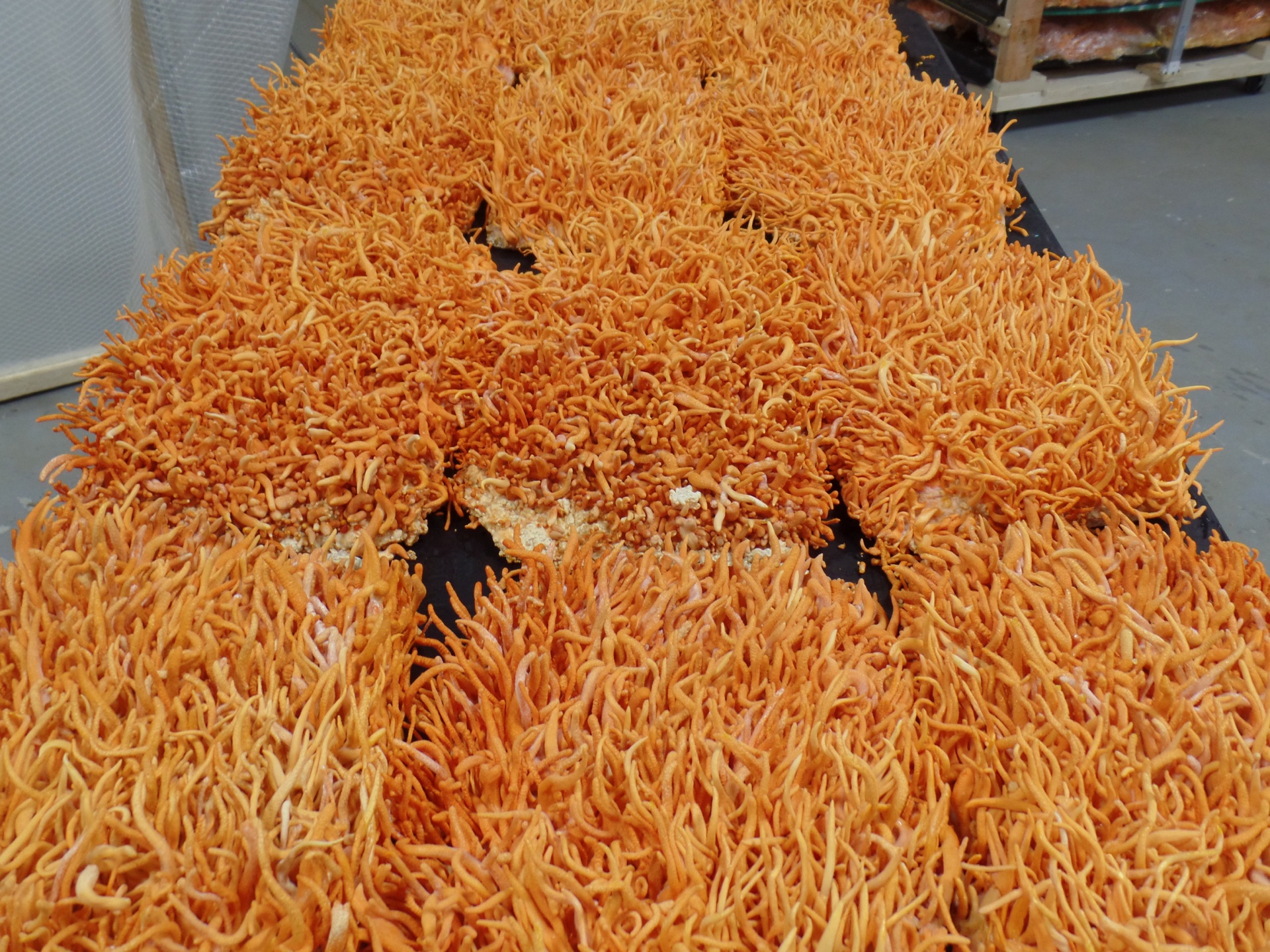
USDA Organic is not a marketing decision. It is a federal certification program with annual audits, a prohibited substances list, and a paper trail that goes back years. Understanding what it actually requires helps you evaluate what it means — and what it does not mean — when a cordyceps supplier uses the term.
What USDA Organic certification requires
To carry the USDA Organic seal, an operation must be certified under the National Organic Program (NOP) by a USDA-accredited third-party certifying agency. Certification is not self-reported and not permanent. It is reviewed annually, and it can be revoked.
The annual audit covers four areas:
Production inputs
Every material used in the growing process — substrate, amendments, water source, cleaning agents — must be approved under NOP standards. No synthetic pesticides, no synthetic fertilizers, no prohibited substances at any stage.
Growing environment
The physical growing environment must be assessed for contamination risk. For an indoor cultivation operation like a cordyceps farm, this includes the grow room itself, the water system, and any shared infrastructure with non-organic production.
Handling and processing
Post-harvest handling, drying, and packaging must also meet NOP standards. For dried cordyceps, this includes the drying process, storage conditions, and packaging materials. The certification covers the full chain from substrate to finished product.
Recordkeeping
Every input purchase, every batch produced, every sale must be documented and available to the certifier. The records demonstrate what went into the operation and what came out. This is where the paper trail that makes organic claims verifiable actually lives.
Annual. On-site. Independent.
That is what USDA Organic certification requires. Not a self-assessment. Not a checkbox. A certifier who was at the farm.
What USDA Organic means for cordyceps specifically
For Cordyceps militaris, USDA Organic certification means the growing substrate was certified organic, no synthetic inputs were used in cultivation, the drying and handling process met NOP standards, and the entire operation was reviewed by an independent certifier who signed off on the documentation.
It does not guarantee a specific compound level. It does not comment on whether the product is fruiting body or mycelium on grain. But it does mean that whatever was grown, it was grown cleanly, and somebody checked.
The difference between USDA Organic and other organic certifications
Other countries have organic certification programs with their own standards and audit requirements. These are not equivalent to USDA Organic certification and do not authorize use of the USDA Organic seal.
A cordyceps product certified organic under another country's program may be a quality product. But it has not been audited under the National Organic Program by a USDA-accredited certifier. If a supplier claims USDA Organic but cannot produce a certificate from a USDA-accredited certifying agency, the claim does not hold up.
How to verify a USDA Organic certificate
Ask for the certificate. It is a single document that names the operation, the certifying agency, the certificate number, and the certified products. A legitimate supplier has this on hand.
You can verify it independently through the USDA Organic Integrity Database at ams.usda.gov/organic-integrity. Search the operation name and the active certification should appear. This takes two minutes and confirms the claim without relying on the supplier's word.
USDA Certified Organic since 1997.
Chris and Lauren were certified before the federal program was formally established. The certificate is real. You can verify it. Documentation available on request.